
Company, Privacy & Boundaries: Balancing Your Homeshare
Mutually beneficial homeshare is a fantastic solution for people wanting to either gain passive income if you're a householder with a spare room, or to save a fortune on rent if you're a lodger. But one of the most rewarding aspects of modern homesharing is the opportunity to share it with someone who is genuinely good company, offers a helping hand, and brings fresh positive energy into your daily life. Yet one of the most common concerns people have before embarking on a homeshare is striking the right balance between enjoying each other's company and maintaining personal space. Getting this balance right is crucial for a successful, long-term homeshare arrangement.
Happily, with clear communication, mutual respect, and some thoughtful planning from the outset, it's entirely possible to create a living arrangement where both householder (host) and lodger feel comfortable, respected, and content.
Understanding what both parties need
Every homeshare is unique because every person is unique, as are their requirements. Empty nesters or a newly retired couple may want cover for their pets and home while they use new found freedoms to travel. A 70-year-old householder who lives alone might seek interesting conversation and the odd shared meal, whilst their lodger, perhaps a busy nurse, needs quiet time to decompress after long days at the hospital. Alternatively, a family or single parent with young children might want a lodger who's a student or mature student, happy to be part of the general buzz of family life, and the lodger might be someone happy to have found a warm, homely atmosphere.
Whilst many householders of all ages would appreciate some flexible help at home, loneliness is also a key issue. According to the Campaign to End Loneliness, around 3.8 million people in the UK feel lonely often or always, and many householders find that having a lodger who offers company alongside practical help, significantly improves their quality of life. Meanwhile, a third of renters aged 20-34 spend more than 40% of their income on rent. There are also thousands of older lodgers, some going through major life changes such as bereavement or divorce, who find themselves struggling with soaring rents. For them, affordable homeshare arrangements are a lifeline.
Cue the hapipod.com homeshare matching platform that enables compatible hosts and helpful lodgers to find each other and connect. The advantage of this site, the only one of its kind in the UK, is that member profiles include personal details that truly matter in shared living, beyond simply the practicalities. It works a little like a dating site. You can learn something about someone's personality, political stance and even their habits before connecting. These are all elements that count in homeshares involving a commitment to sharing time as well as space with someone.
The key is understanding what each person needs before the homeshare begins, and being honest about expectations.
See also The Right To Rent - Why Live-In Landlords are thriving
Creating a Trial Period
Give it a test-drive. The biggest fear many people have, especially about homesharing for the first time, is the irreversibility of it. What many people don't realise it that the beauty of 'lodging' is the short notice period. This is typically 1 month, but shortest duration legally allowed can be 1 week if the lodger is paying weekly and this is pre-agreed. There are no fixed contract periods with lodging, so both parties are free to terminate with due notice if the homeshare is not working out as hoped.
Compatible homeshares rely on good faith on both sides to make them successful. To test this out, a happy accommodation is often found to be a 3 month trial period. Whilst both host and lodger may ultimately seek a longer term, you both agree to give it a try without longer term commitment from the outset. hapipod offers a homeshare contract (licence agreement) template which can be adapted to suit individual homeshares, and you can specify this within it.

Setting boundaries from the start
Communication is everything. Before moving in together, have an open conversation about lifestyles - daily routines, social habits, and expectations around shared spaces. Here are some practical questions to discuss:
- What do daily timings look like - typical wake up, mealtimes and bed times?
- If the bathroom is shared, is there a time block of unavailability?
- Would you enjoy sharing a kitchen simultaneously and occasionally cooking and/or eating together?
- Does either party work from home?
- Which areas of the home are shared and which are private?
- Are guests allowed at all, if notice is given - a lodger may have a partner?
- What are preferences around noise - for example playing music or an instrument?
- Are there any specific habits or activities you can't easily tolerate - e.g messiness, leaving lights on, leaving a bathroom unclean?
- Importantly: What sort of flexible help is needed and for roughly how many hours per week? This is a focal part of the arrangement and should be enshrined in the agreement.
- Are there specific days or times that work best for shared activities?
These conversations might feel a bit formal at first, but they're invaluable for preventing misunderstandings later. hapipod's detailed profiles and matching algorithm help identify compatible personalities and lifestyles, but nothing replaces honest dialogue between two people who'll be sharing a home.
See Summer is the Perfect Time to Consider a hapipod Homeshare
Creating a rhythm that works
Once a homeshare begins, you'll naturally start to find your rhythm. Perhaps you discover that you both enjoy a cup of tea, or a glass of wine and a chat after dinner on weekdays, but weekends are for doing your own thing. Or maybe you're both early birds who appreciate the odd breakfast together before starting the day.
Flexibility is important. Life constantly changes, schedules shift, and what worked brilliantly in month one might need adjusting by month three. Regular, informal check-ins, perhaps once a month, can help ensure both parties remain happy with the arrangement.

Some practical tips for maintaining balance:
- Establish "quiet hours" if one person needs undisturbed time
- Create a simple rota for tasks to avoid confusion
- If there is more than one communal room perhaps allocate a separate one for your lodger, or create a timetable for use of certain shared rooms beyond shared time.
- Respect closed bedroom doors as a signal that someone needs privacy
- Use a shared calendar or notice board for social events and visitors
- Be mindful of each other's work patterns in terms of expected help or interaction, especially if one person works from home
See Why Women over 50 are Turning Spare Rooms into Support and Income
When company becomes companionship
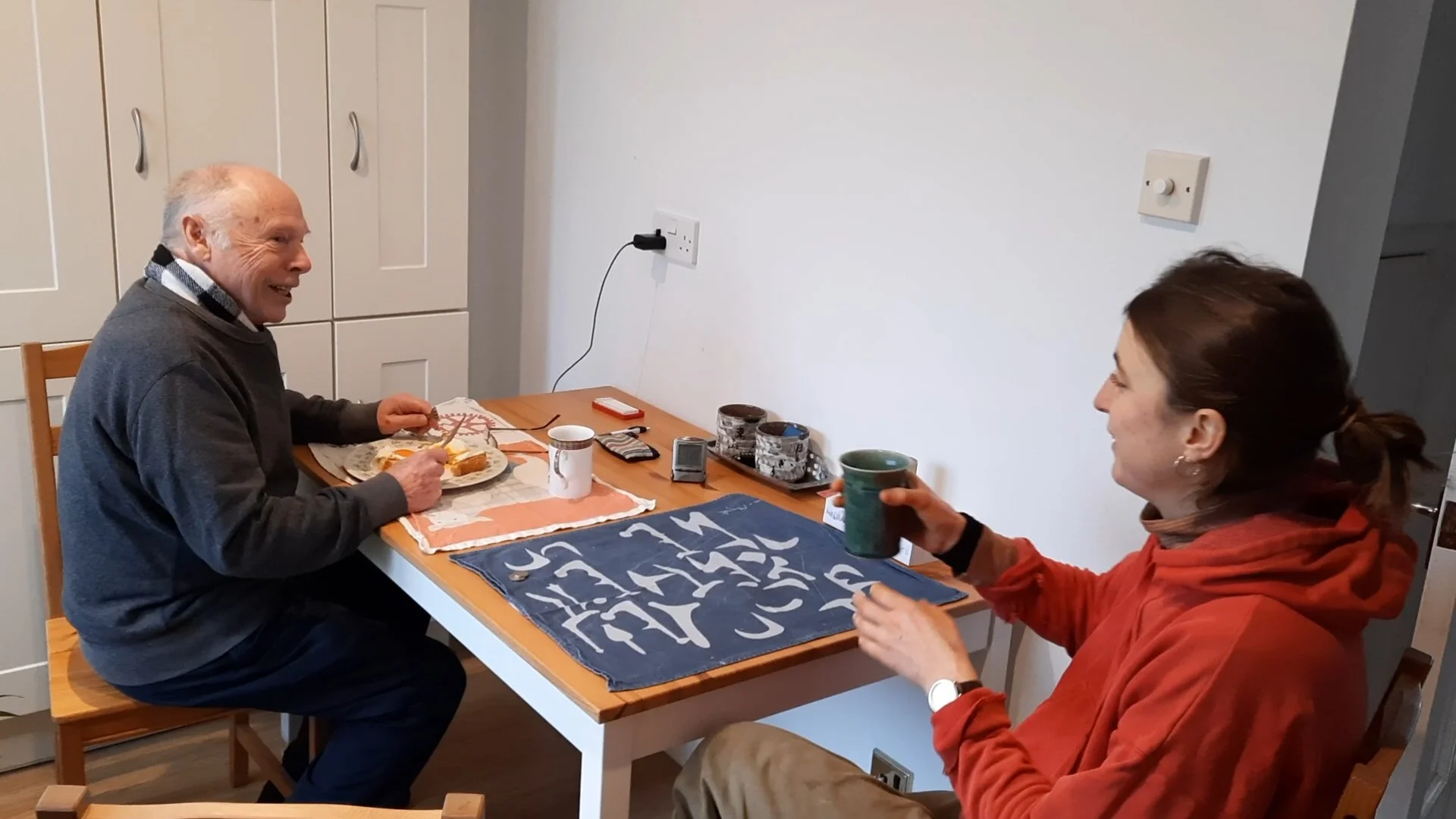
Many homeshares blossom into genuine friendships, some between contemporaries and some between people who became friends across the generational divide. Allan, an 80 year old globe-trotting retiree in Bradford on Avon, was happy that his young helpful lodger Grace kept in touch long after she moved out. You can see their homeshare story in this short film. Meanwhile Barbara, a lodger in her 50s moved into a hapipod homeshare in Shoreham on Sea with a host who was in her 40s. She said "I found the kindest, most wonderful host through hapipod. We became the best of friends immediately. I helped her out at home and she shared such helpful advice and guidance. My stay there was truly a blessing."
A 2022 study by the UK's National Institute for Health Research found that intergenerational relationships, where older and younger people connect regularly, benefit both parties' mental health and wellbeing (https://www.nihr.ac.uk). Hosts gain fresh perspectives and energy, whilst lodgers often appreciate the wisdom, stability, and mentorship that comes from either knowing someone from an older generation, or relocating and finding someone who can 'show them the ropes'!
Of course, many homeshares remain friendly but not deeply personal. They are equally about practicality and what makes life easier for both parties. What matters is mutual respect, reliability, and a pleasant home environment.
See Find your Perfect Place to Relocate for Your New Job

Respecting privacy and personal space
Even in the happiest homeshare, everyone needs their own space. Hosts should enable their lodgers to feel like their room is a genuine private sanctuary, whilst lodgers should respect that certain areas—perhaps a home office or a particular armchair—might be especially important to their host.
If something isn't working, it's always best to address it kindly and quickly rather than letting irritations simmer into bigger problems if left unspoken. A simple "I've noticed you're not using the recycling bin. Could you please try and remember as it's very important to me?" can prevent resentment from building.
Conclusion
The beauty of homesharing lies in its flexibility. Whether you're a householder seeking interesting company and a helping hand, or a lodger looking for an affordable, welcoming home, the arrangement works best when both parties feel comfortable being themselves. By setting clear boundaries, communicating openly, and respecting each other's need for both company and privacy, you create the foundation for a homeshare that genuinely enriches both your lives.
Interested in finding a compatible homesharer who understands your needs? Visit hapipod.com to discover how our unique matching algorithm connects householders and lodgers based on personality, interests, and lifestyle—helping you find the right balance from the very start.
Ready to find your homeshare?
Join thousands of hosts and lodgers building meaningful connections across the UK.
Get started free